Under the Glow: The Architecture of Floodlit Football
21 September 2026
Under the Glow: The Architecture of Floodlit Football
Football was meant to be played in the fading light of a Saturday afternoon, but the introduction of floodlights dragged the game into the night. It changed the rhythm of the sport, turning the pitch into an isolated, glowing stage where everything feels sharper and more urgent.
The Death of the Saturday Afternoon
Before the pylons rose, football was a daylight pursuit. You finished your shift, grabbed a pie, and stood on the concrete just as the sun began to dip behind the stands. The introduction of permanent floodlighting in the mid-20th century didn't just add a few hours to the schedule; it broke the hold that the afternoon had on the sport. Suddenly, the mid-week game became a different beast entirely. It felt illicit, a deviation from the natural order that demanded more focus and intensity.
The Aesthetic of the Night Match
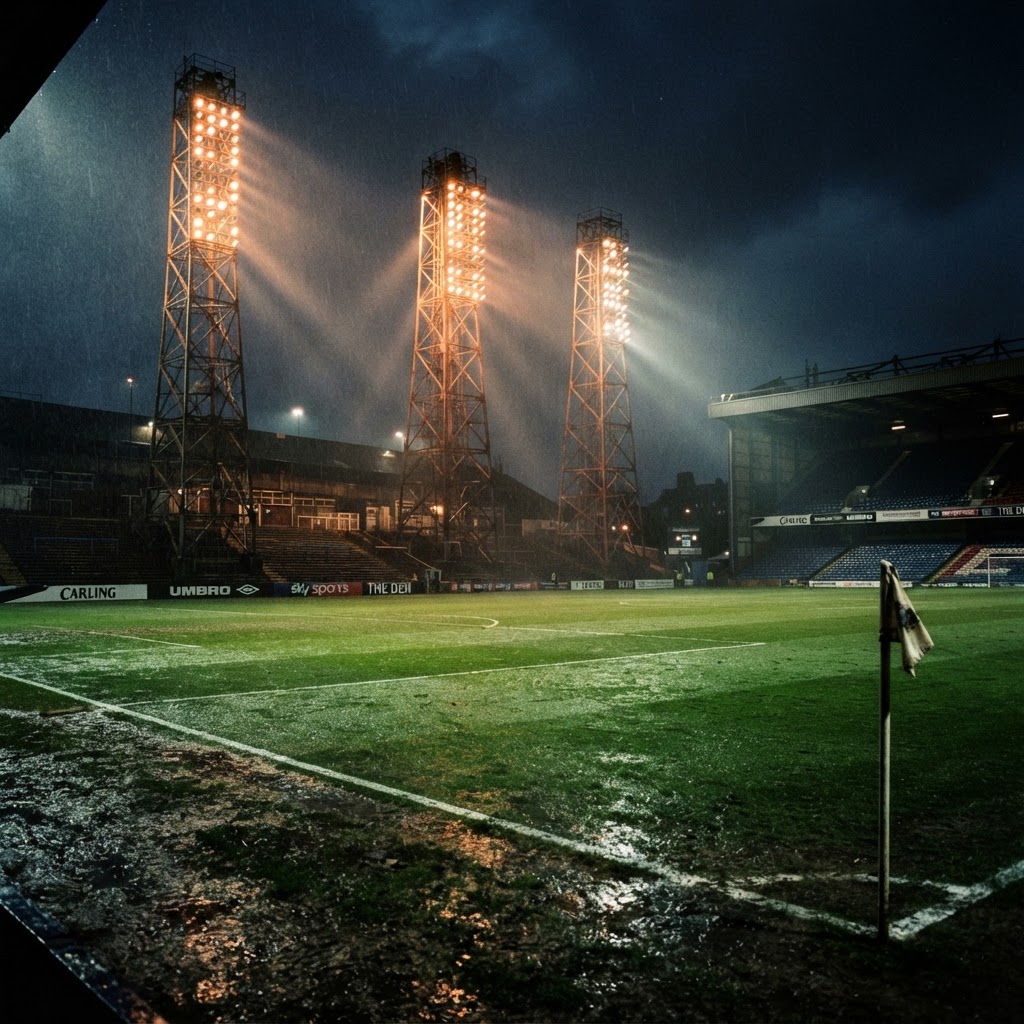
There is a specific visual language to a floodlit match. The way the light spills onto the damp grass, creating long, distorted shadows of players, makes the game feel like a cinematic event. The crowd disappears into the darkness of the stands, leaving only the pitch as a high-definition arena. It is why those midweek fixtures under the lights feel like they matter more. The environment strips away the distractions, leaving only the tactical battle and the cold air hitting your face.
Technical Brilliance and the Pylon Iconography
Early floodlights were architectural marvels—massive, skeletal steel pylons that defined a club’s skyline. They were industrial icons that stood as beacons for the local area. While modern stadiums use roof-integrated LED systems, there is a hollow nostalgia for those flickering, humming towers that seemed to struggle against the dark until the final whistle blew. They were part of the matchday furniture, as essential as the turnstiles or the pitch itself.
How Night Games Changed the Game
The shift to night football influenced how players approached the game. Evening matches under the lights are physically different; the air is usually colder, the grass slicker, and the pace of the ball feels faster. It forced a change in kit design, too—brighter, more reflective colors became necessary for visibility. It also changed the crowd. A Tuesday night under the lights is where the real believers show up. It is not the casual Saturday outing; it is a commitment to the cause regardless of the weather.
The Philosophy of the Dark
Why do we love the night game? Because it feels like an interruption to the daily grind. It is the moment where the normal world stops, and for ninety minutes, you are existing in a pocket of space lit by artificial suns. It is the purest form of football culture, where the rest of the week fades away and only the result matters. Whether it is a Champions League tie or a freezing local derby, the floodlights create a pressure cooker that day matches simply cannot replicate.
If you find yourself missing the intensity of a cold Tuesday night match, you can stay warm with pieces from our Cold Tuesday collection.