Concrete and Steel: Why Standing Terraces Still Define Football Identity
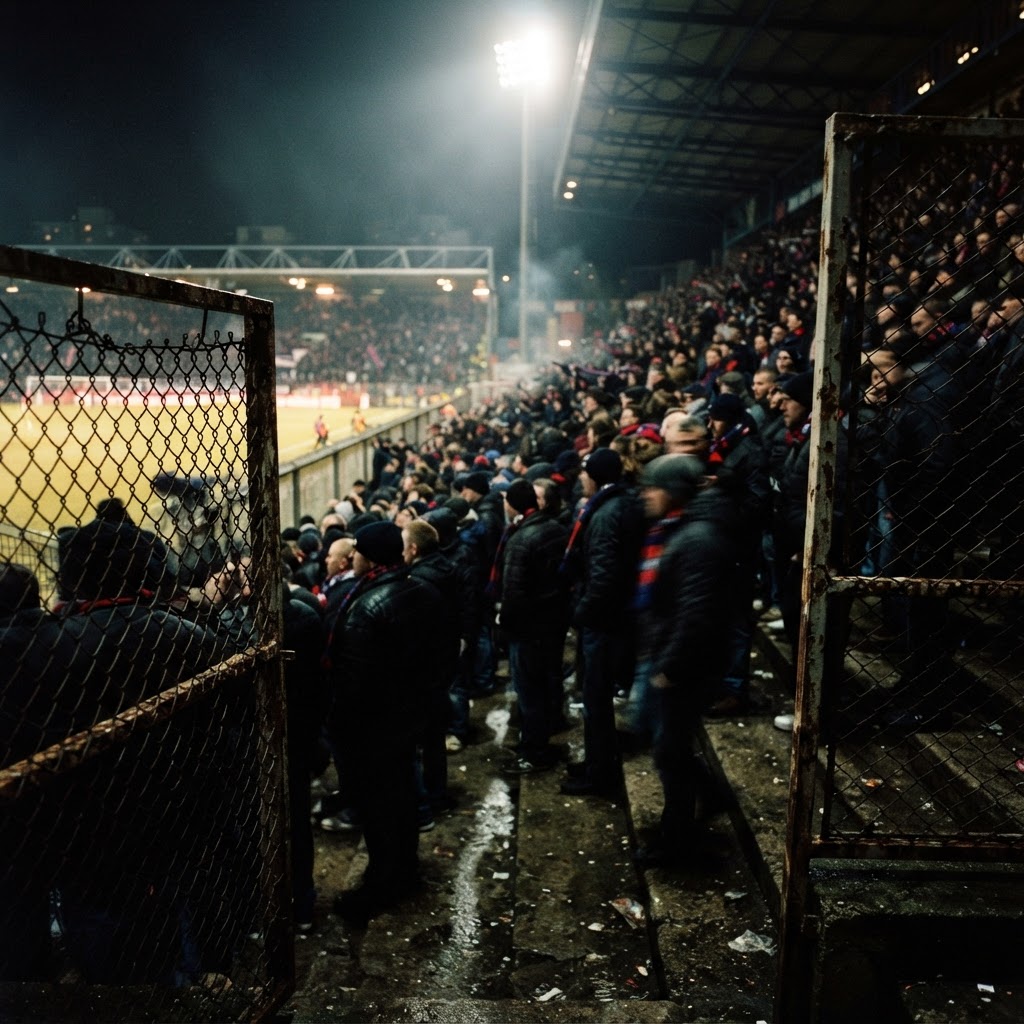
There is a physical difference between watching a match and participating in it. The shift from standing terraces to all-seater stadiums was sold as progress, but for the soul of the game, it was a quiet silencing. When you stand, you are part of a shifting mass, a singular organism that reacts to the ball in real time.
The Gravity of the Terrace
On a standing terrace, the game isn't just in front of you; it is around you. You don't sit down when the ball hits the back of the net. You don't worry about legroom or whether your neighbor is blocking your view. You move with the momentum of the crowd. There is an unspoken hierarchy on the terraces, a collective rhythm that dictates when to roar and when to hold your breath. Seating forces an individual experience; standing demands a communal one.
The Geometry of Sound
When you are packed onto a concrete slope, the acoustics change. Chants don't just float into the air; they echo off the steel roof and bounce back into the center of the stand. The physical density of a standing crowd creates a pressure chamber of noise. In a seated environment, the gap between rows acts as a dampener, breaking the chain of energy that travels from the front of the stand to the back. A standing crowd is a unified engine of sound, impossible to replicate in a stadium designed for personal space.
Style and Stature
Terrace culture isn't just about how you watch; it's about how you carry yourself. The history of the game is written in the fashion worn on these slopes. From the oversized knits and vintage track tops to the worn-in trainers that have survived a hundred damp winters, the terrace is a catwalk of lived-in history. Standing forces a posture, a stance, a way of owning your space in the crowd. It is where football identity is forged, far away from the sanitized hospitality boxes and plastic cup holders.
The Philosophy of the View
People often ask why fans fight so hard for the return of rail seating and standing sections. It is not nostalgia for the sake of the past; it is a rejection of the theater-goer mentality. Seating encourages spectatorship. You watch the clock, you check your phone, you stay quiet during the lulls. Standing creates a constant state of alertness. You are on the balls of your feet because the game requires your full attention. It is the difference between watching a documentary and living the event.
Keeping the Ritual Alive
Whether you are bracing against a cold Tuesday night breeze or leaning into the roar of a weekend derby, the environment shapes your loyalty. Our More Than 90 Minutes collection is built for those who understand that the match is only a fraction of the commitment we make to the game. It is about the grit, the concrete, and the constant need to stay connected to the grassroots reality of the sport.
Beyond the Plastic Seat
The future of the game doesn't lie in luxury suites. It lies in the return to the terrace, the reclamation of the space where the crowd is the protagonist. As we look at the evolution of modern stadiums, the inclusion of standing areas is the most honest admission that football was never meant to be a seated affair. It was meant to be felt, shared, and survived, one match at a time.