The Glass Screen Era: How Television Rewrote the Language of Fandom
There was a time when the game existed only in the present. You were there, or you heard about it from a bloke at work who saw it through a cloud of cigarette smoke. Then the cameras arrived, and the way we consume football changed forever.
The Death of the Local Myth
Before the saturation of satellite television, legends were built on whispers and local papers. If your centre-forward did something spectacular, it lived on in the stories told in the back row of the terrace. Television dismantled that privacy. Once the cameras started beaming every goal into millions of front rooms, the mystery evaporated. We stopped needing to imagine the strike; we could hit rewind and watch it until the pixels blurred. The game went from an oral history to a visual product.
The Scheduling of Our Lives
We no longer dictate when the game happens. Once, Saturday at three was an absolute law. Now, the television schedule dictates our Sunday lunch, our Friday evenings, and our Monday routines. We have surrendered the rhythm of our week to the broadcasting slot. It changed the philosophy of the matchday, turning what was once a community anchor into a flexible content window for a global audience. We learned to plan our entire lives around a kickoff time decided by a production meeting in a city hundreds of miles away.
From Spectator to Critic
Television gave every fan a monitor’s view. We saw the missed offside, the subtle shirt pull, and the bench reaction that those inside the stadium missed in real-time. This fostered a new breed of fan: the armchair expert. We stopped arguing about the spirit of the game and started arguing about VAR and camera angles. The screen granted us a sense of authority, making us feel like participants in the officiating process rather than just witnesses to the event.
The Aesthetic of the Broadcast
Television brought us the polish of the modern era. We became obsessed with high-definition kits, the way the floodlights catch the grass, and the cinematic quality of the pre-match build-up. The broadcast aesthetic has filtered down into our own wardrobes; we dress for the game like we are part of the studio production. We are more conscious of our appearance, our scarves, and our colours because we know we are part of the frame.
Maintaining the Human Element
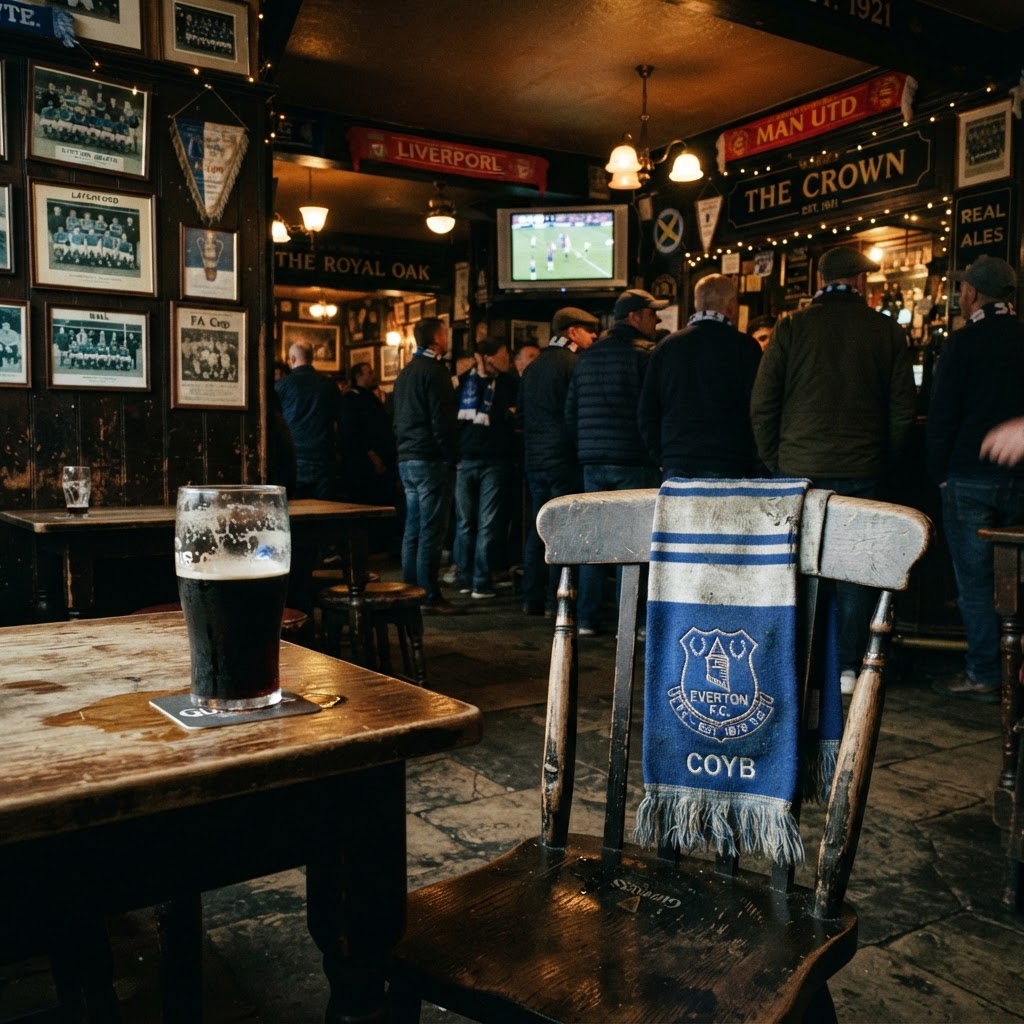
Despite the glossy production, the soul of the sport remains in the friction of the crowd. Television can capture the goals, but it cannot capture the damp air, the cold concrete, or the shared tension before a penalty kick. We have to be careful not to let the digital version replace the visceral experience of actually being there. If you believe that the soul of this sport is defined by what happens off the pitch as much as on it, you might like our More Than 90 Minutes collection.
The Future of the Fan
We are now in a phase where the screen is the primary point of contact for most supporters. While the technology evolves, the core requirement remains the same: a deep-seated connection to a club that feels like an extension of your own identity. Television didn't kill the game; it just amplified the volume. As long as we keep the focus on the rivalry, the banter, and the passion that exists outside of the broadcast booth, the culture stays ours.