The Playground Currency: Lessons from the Football Swap Shop
There was no logic to the playground trade. It was a raw negotiation, built on gut feeling, social pressure, and the desperate desire to complete a set before the bell rang for the start of the next lesson.
The Anatomy of the Deal
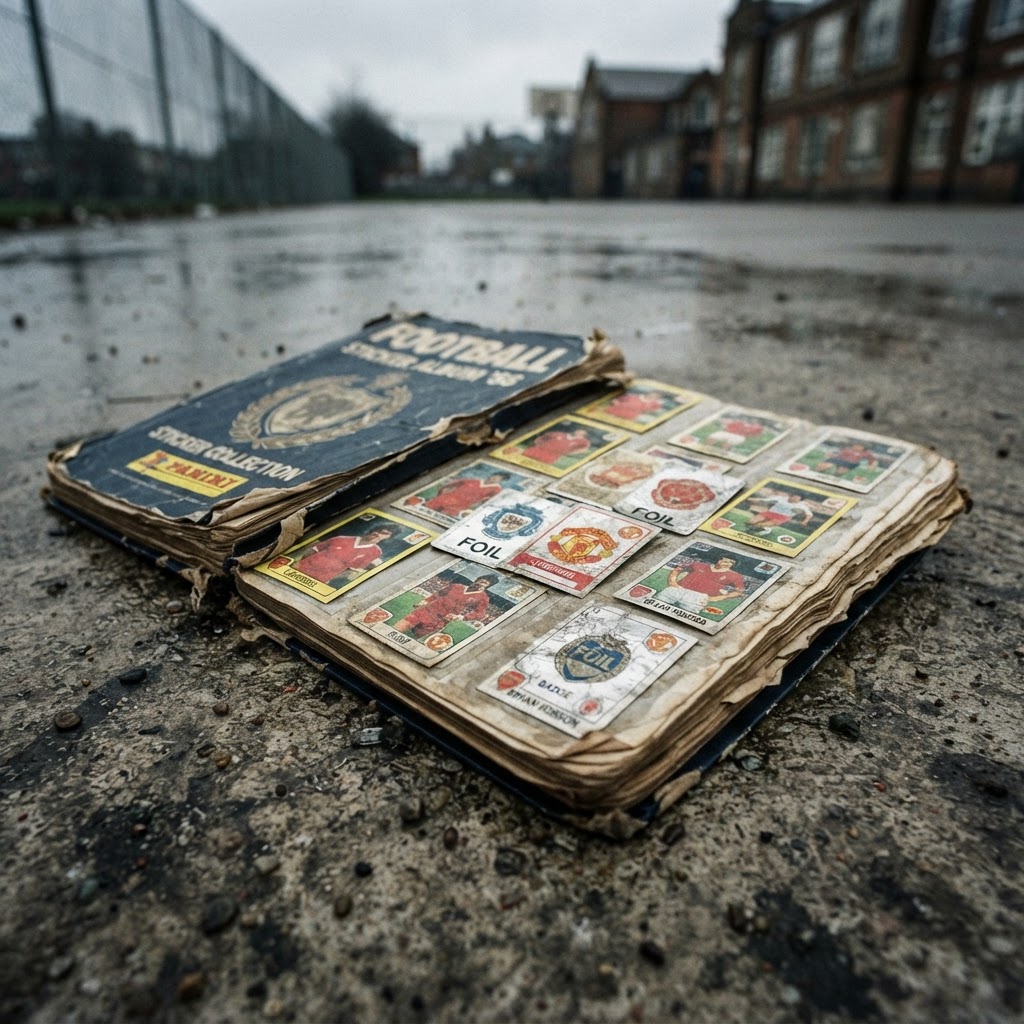
Trade was constant. A single shiny sticker was worth a pile of base-level players, but context was everything. If you held a rare goalkeeper from a team nobody liked, he was worthless until someone realized they needed him to finish their page. The playground was where we learned the value of leverage. You sat on the concrete, fingers stained with graphite and playground grit, analyzing your duplicates against the gap in your opponent’s collection. It was business, but it was done with the intensity of a transfer deadline day.
The Hierarchy of the Rare
Not all stickers were created equal. The shinies were the royalty of the playground hierarchy. They were guarded in special pockets, kept away from the grime of the lunch hour football match. To own a shiny was to hold power. You didn't trade a shiny for anything less than a massive upgrade, and the negotiations often involved a crowd of observers leaning in to judge the fairness of the swap. It was an early lesson in supply and demand that most economists would never quite replicate with the same level of tribal passion.
More Than Just Cardboard
We didn't just trade these pieces of paper; we traded identities. By choosing which players to prioritize, we were signaling our footballing philosophy. You wanted the strikers, the flair players, the ones with the famous names. Nobody cared about the defensive workhorses unless they were the final piece of the puzzle. It was a distorted view of the game, sure, but it cemented our loyalties before we ever set foot in a stadium. You learned the names of players from clubs three divisions down simply because you pulled their face from a foil packet.
The Scarcity Principle
There was always that one sticker that never appeared. The ghost card. It became a local legend. Everyone knew someone who had seen it, but nobody had the proof. This scarcity created a fever. We spent our lunch money on packs, hoping to hit the jackpot, only to end up with five versions of the same backup midfielder. That frustration was a rite of passage. It taught us that sometimes, you lose. It taught us that the hunt is often more exciting than the collection itself.
The Legacy of the Swap
Looking back, the playground swap was our first experience of football fandom outside of the TV screen. It was tactile. It was communal. It was ours. While today's kids are clicking buttons on mobile apps to collect digital assets, they lack the physical interaction of looking someone in the eye and saying: no, I’m not trading my star striker for that bench-warmer. That interaction shaped how we approach the game today—with a critical eye and a stubborn sense of value.
If this look back at the roots of your football obsession reminds you of the days when the game was purely about the joy of being involved, check out our Born to Play collection.
Keeping the Flame Alive
Football culture isn't just about what happens on the pitch for ninety minutes. It is about the years of background obsession, the collections we kept, and the arguments we had over who was actually the best. We still carry those playground lessons with us every time we step into the stand or watch a game with friends. It was never just a game, and it was never just a sticker.