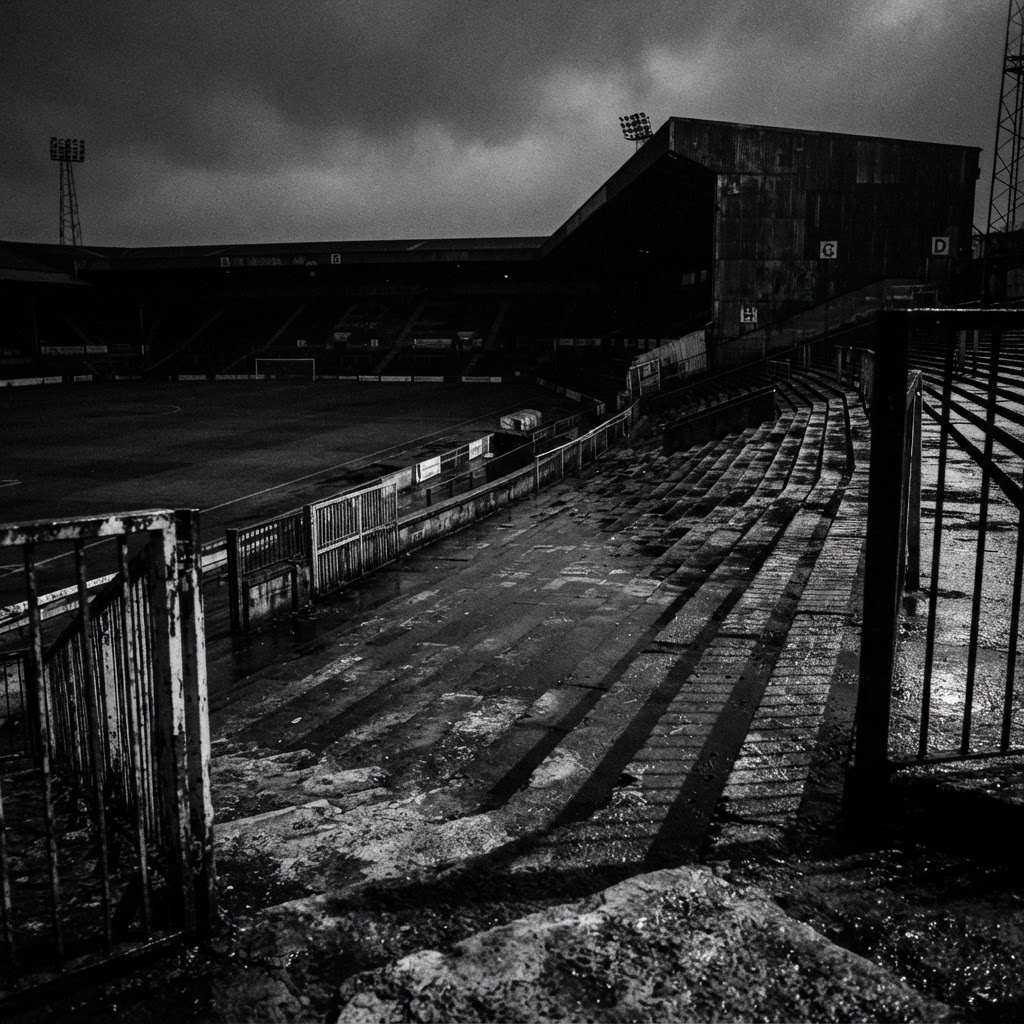
Standing Room Only: The Lost Art of the Terrace
Football was never meant to be watched from a plastic bucket seat. For decades, the terrace was where the game lived, breathed, and occasionally boiled over into something dangerous and beautiful.
The Gravity of the Terrace
When you stand on a concrete step, the physics of the game change. You aren't just watching a match; you are part of a surge. When the ball hits the back of the net, there is no buffer between you and the person next to you. It is a physical reaction that travels through the crowd like an electric current. Seating isolates the individual. You have your personal space, your armrests, and your assigned coordinate. Standing forces a collective identity. You sway as one, groan as one, and celebrate as one. It is the difference between attending a theatre and being involved in a riotous assembly.
The Aesthetics of the View
Critics of standing often cite the view, but that misses the point entirely. The terrace gives you the best perspective of the flow of the game because you are constantly adjusting your position to see through the gaps. You get a feel for the pitch that a seated fan never achieves. From a seated position, you are looking down at a spectacle. From the terrace, you are at eye level with the turf. You see the mud on the players' boots and the spit on the grass. You are close enough to hear the thump of a clearance or the shout of a captain organising his line.
The Language of the Steps
Every terrace has its own dialect. The corner is for the vocal ones, the middle is for the thinkers, and the back is for the ones who have been coming for thirty years and need a wall to lean on. Standing allows for a dynamic shift in focus. If the action moves to the right wing, the entire stand shifts in a wave. Seats trap you. They dictate your posture and your engagement. Standing requires stamina, but it rewards the fan with a deeper connection to the rhythm of the game. It is a commitment that seats simply do not demand.
Safety and Soul
There is a sanitised version of football that seating brought to the English game. It made it safer, yes, but it also made it quieter. The terrace was always messy, often uncomfortable, and entirely authentic. It is the place where legends are made not just by the players, but by the fans who stand through sleet and wind just to be counted. The return of rail seating is a nod to what we lost, an admission that we were never meant to sit still while the game happens in front of us.
The Identity of the Crowd
If you want to understand the soul of a club, don't look at the corporate boxes. Look at the group that insists on standing even when the stewards try to push them down. That defiance is the heartbeat of football. It says that we are not here to consume a product; we are here to support a cause. It is about the shared burden of a losing streak and the collective ecstasy of a last-minute winner. We were born to stand, to chant, and to endure.
If this reminds you why the atmosphere is the most important part of the matchday, you might like our This Is Our Game collection.