Threads of the Terrace: A History of Football Style
Football fashion is not a trend. It is an identity forged in concrete and rain. Every decade has left a mark on what we wear to follow the team, moving from pure function to a visual language that speaks volumes before a ball is even kicked.
The Utility Era
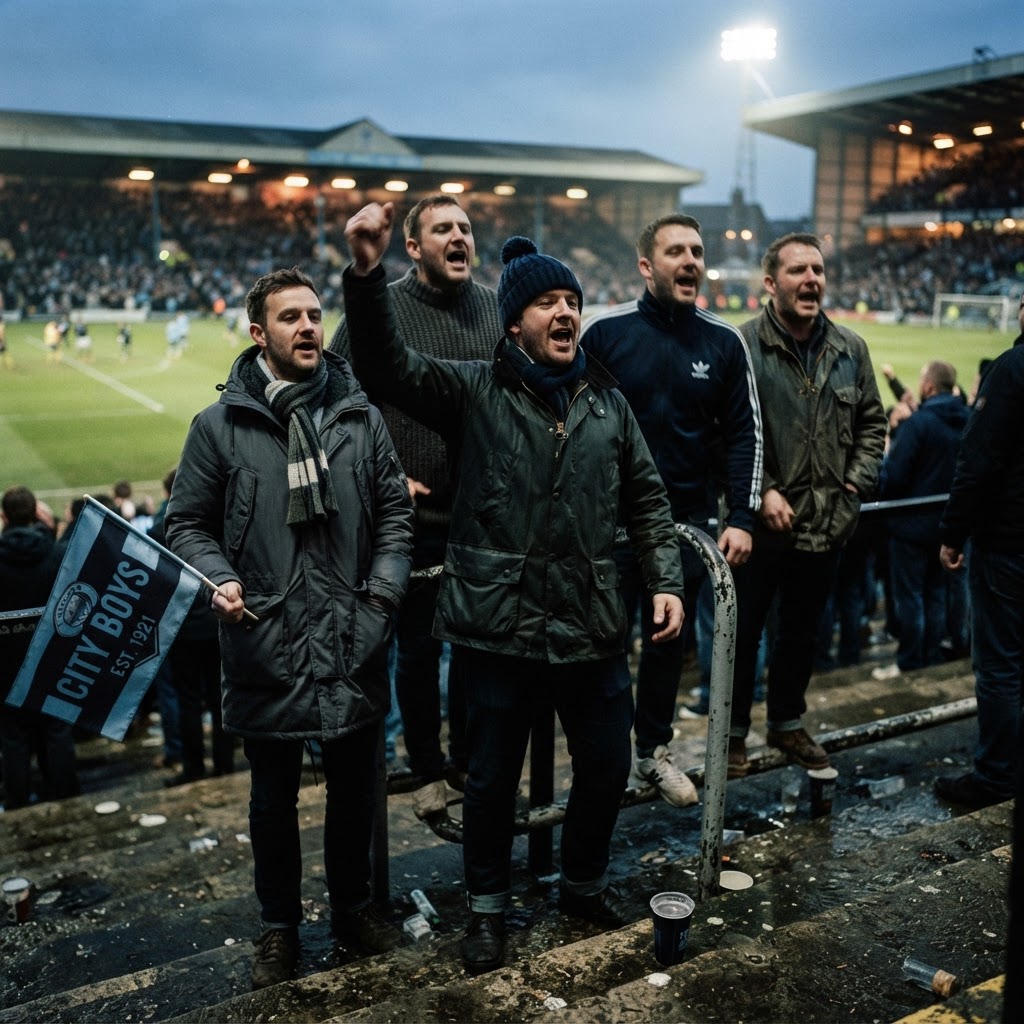
In the sixties and seventies, the aesthetic was defined by what you wore to the factory or the docks. Heavy wool overcoats, sturdy leather boots, and straight-cut trousers were the standard. It was about being able to stand on a wet concrete step for ninety minutes without turning into an icicle. The look was unintentional, born from the reality of the working class. You wore what you had, and you wore it with a specific kind of pride that made the stadium look like a sea of monochromatic, hard-wearing grit.
The Continental Influence
When the European Cup campaigns of the seventies and eighties brought fans into contact with Italian and French boutiques, the game changed. Suddenly, the terrace wasn't just about utility; it was about the acquisition of the rare. The era of the casual was born, focused on high-end sportswear, trainers, and designer knitwear that had never touched a British high street. It was a covert operation of style, a quiet rebellion against the drudgery of the eighties, where the silhouette shifted to track jackets and track tops that were meant for movement, not just warmth.
The Oversized Revolution
By the nineties, the shape changed again. The influence of youth culture, rave, and the growing commercialization of the kit bag brought us into the era of the oversized aesthetic. Baggy denim, giant windbreakers, and the rise of the replica shirt as everyday casual wear defined the decade. It was the period where the line between the supporter on the fence and the player on the pitch became blurred, with jerseys becoming a staple item that survived the wash cycle and the pub floor alike.
The Minimalist Shift
Today, the culture has matured into something more understated. We have moved away from the neon kits and the garish logos of the mid-2000s in favor of clean lines and subtle nods to the game's heritage. The modern terrace aesthetic is about quality over quantity. It is a refined look that draws inspiration from the past while utilizing modern materials. We are seeing a return to the roots—less branding, more texture, and a focus on pieces that work as well in the stadium as they do in the pub after a hard-fought result.
Defining Your Own Uniform
Style on the terrace remains the most honest form of self-expression in football. It is not dictated by influencers or runway shows; it is dictated by the shared experience of the match-going fan. If you are looking to build a wardrobe that respects the history of the game while staying comfortable for the long haul, you might find something fitting in our More Than 90 Minutes collection. These pieces are designed with the terrace in mind, balancing comfort, durability, and a clean, recognizable aesthetic.
Why We Dress For The Game
We dress because the match is an event. It is the one place where we shed the corporate skin and return to a tribal state. The clothes we choose are a badge of our history and our place in the hierarchy of the stands. Whether you lean toward the clean lines of a modern jacket or the classic feel of a heritage knit, the point remains the same: the game deserves your best effort, and so does the match-going tradition.